Elizabeth Amos, NP
Family Nurse Practitioner · Certified Nurse Midwife · Institute for Functional Medicine Certified Practitioner
Fertility · Hormones · Women's Health · Melbourne, FL
I've been where you are.
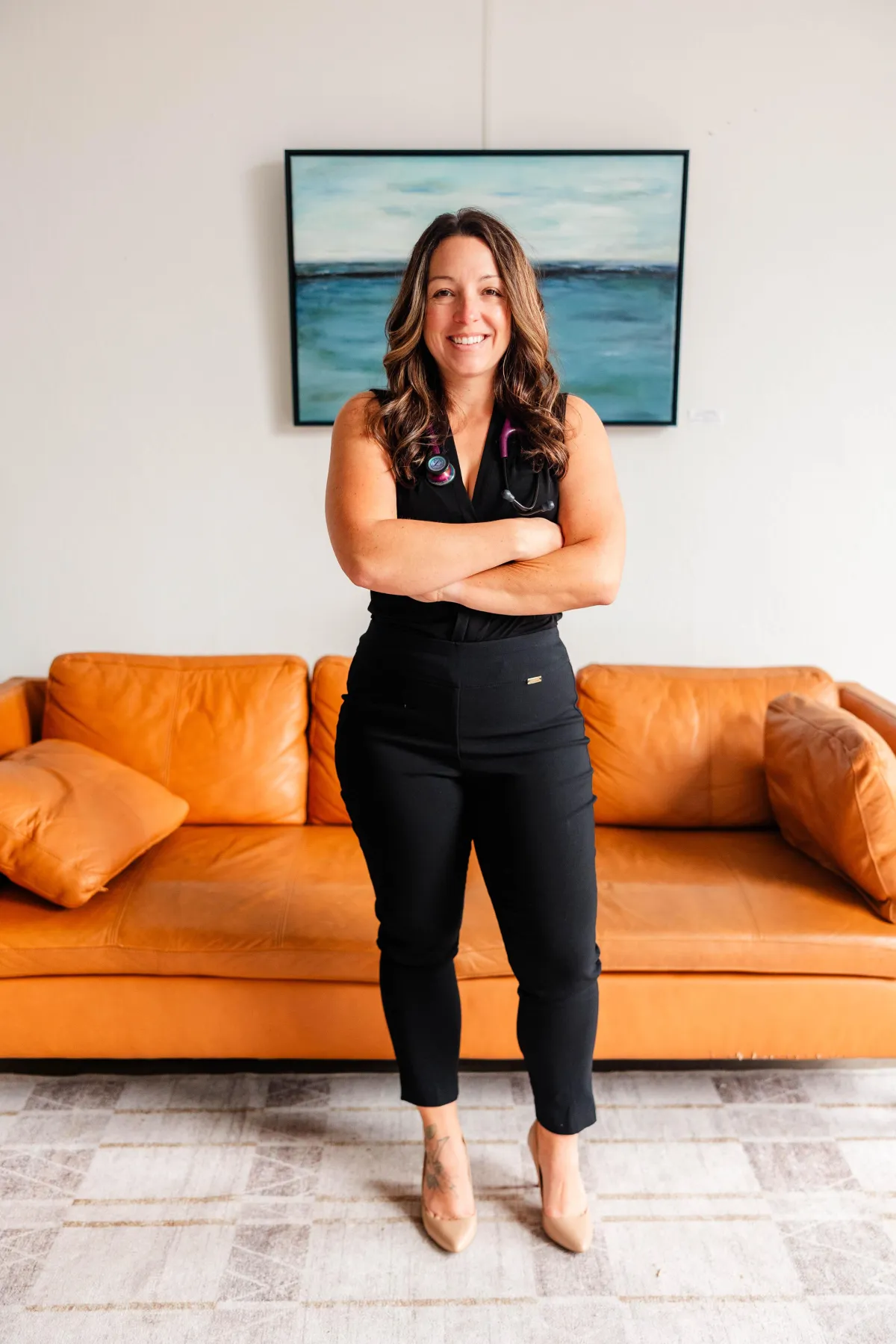
Elizabeth Amos, NP
Melbourne, Florida
Family Nurse Practitioner
Certified Nurse Midwife
Institute for Functional Medicine Certified Practitioner
A Thoughtful, Root-Cause Approach to Healing
I struggled with chronic daily migraines that were pushing me toward disability. I saw every kind of specialist. I did everything I was told. My labs were always "normal."
It wasn't until I found functional medicine — and discovered undiagnosed Lyme disease, significant gut dysfunction, and hormonal imbalances that had gone unaddressed for years — that everything finally changed. I didn't just get better. I felt better than I ever had in my life.
That experience is why I practice the way I do.
I know what it feels like to sit in an exam room and be told your results look fine while your body is telling you something completely different. I know what it feels like to be dismissed, to feel broken while being told you're fine, and to finally find someone who actually looked at the whole picture.
Healing my own health required addressing multiple layers at once — eliminating food intolerances, healing my gut, correcting hormonal imbalances, and reducing chronically elevated cortisol through sustainable lifestyle changes. It was not a single fix. It was a process. And understanding that process from the inside is what makes me a better clinician.
That experience shaped everything about how I practice today.
How I practice.
I believe the most effective care comes from a balanced integration of functional and conventional medicine. I am not anti-medication and I am not anti-conventional care. I have full prescribing authority as a licensed Family Nurse Practitioner and I use every tool available when it is the right one — including pharmaceuticals when they are genuinely needed.
What I am against is stopping at the symptom when the root cause is findable.
My approach is built on three things:
Time. Your initial visit is 90 minutes. Follow-up visits are 30 to 60 minutes. There is no rushing through your history, no skimming your labs, no standardized protocol handed to you at the end. The time is there because the complexity of what we are investigating requires it.
Data. Every recommendation I make is tied to something specific in your labs, your history, or your presentation. I do not believe in guessing. Comprehensive, targeted testing tells us what is actually happening in your body — and makes the plan that much more precise.
Education. I go through every piece of your data with you, line by line. Not because it is efficient, but because a patient who understands their own health can advocate for themselves, make better decisions, and maintain their results long after our work together is done. That is the point. My goal is not to keep you as a patient indefinitely. It is to help you heal — and then help you maintain that healing on your own.
A perspective most providers can't offer.
As both a Family Nurse Practitioner and a Certified Nurse Midwife, I have had the privilege of walking women through the full arc of their reproductive lives — from the early signs of hormonal imbalance and the struggle to conceive, through pregnancy, birth, and beyond.
This is not a common combination in functional medicine. Most providers specialize in one area. I have worked at the intersection of reproductive health, hormonal medicine, and functional care long enough to understand how deeply these systems connect — and how much gets missed when they are treated in isolation.
Not everyone who uses the term "functional medicine" has gone through formal training in it. I completed certification through the Institute for Functional Medicine because I wanted a structured, evidence-based framework — not just a philosophy. IFM certification requires coursework, clinical application, and a certification exam. It is the field's standard of care, and it is the foundation of how I approach every patient.
Who I work with.
My practice focuses on women ages 15–45 dealing with hormonal health concerns, fertility challenges, gut dysfunction, autoimmune conditions, chronic fatigue, and metabolic issues. I also see patients of all ages and backgrounds — functional medicine is not limited by condition or demographic.
What my patients have in common is not a specific diagnosis. It is a specific experience: they have been told everything looks fine, and they know it doesn't. They are ready for a more thorough, more personalized approach — and they are willing to invest the time and energy that real healing requires.
I see patients in person at my Melbourne, Florida office and via telemedicine for patients in Florida, Kansas, Oklahoma, Oregon, and Pennsylvania.
Ready to begin?
Start with a free 15-minute consultation — a brief call to ask questions, share what you're dealing with, and find out whether this is the right fit. No pressure, no obligation.
HSA & FSA accepted · Cash-pay only · In-person in Melbourne, FL & telemedicine available